
Now Reading: The Real Winners of Every Tech Boom Sell the Shovels
-
01
The Real Winners of Every Tech Boom Sell the Shovels

Key Takeaways
- In every major tech boom, the suppliers of essential tools have historically outperformed the end-product companies.
- The five largest US hyperscalers are spending over $650 billion on AI infrastructure in 2026, and that money flows directly to suppliers.
- NVIDIA dominates over 90% of the data center GPU market and is considered the clearest picks-and-shovels play in AI today.
- The infrastructure layer includes chips, data centers, power, cooling, and networking, five distinct layers a beginner can research.
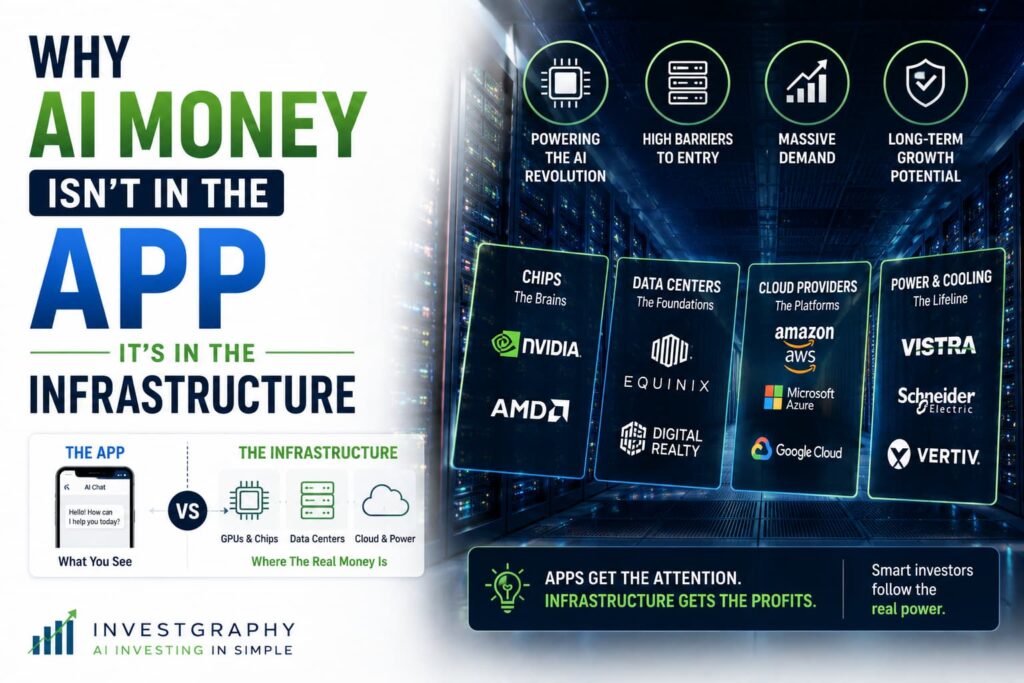
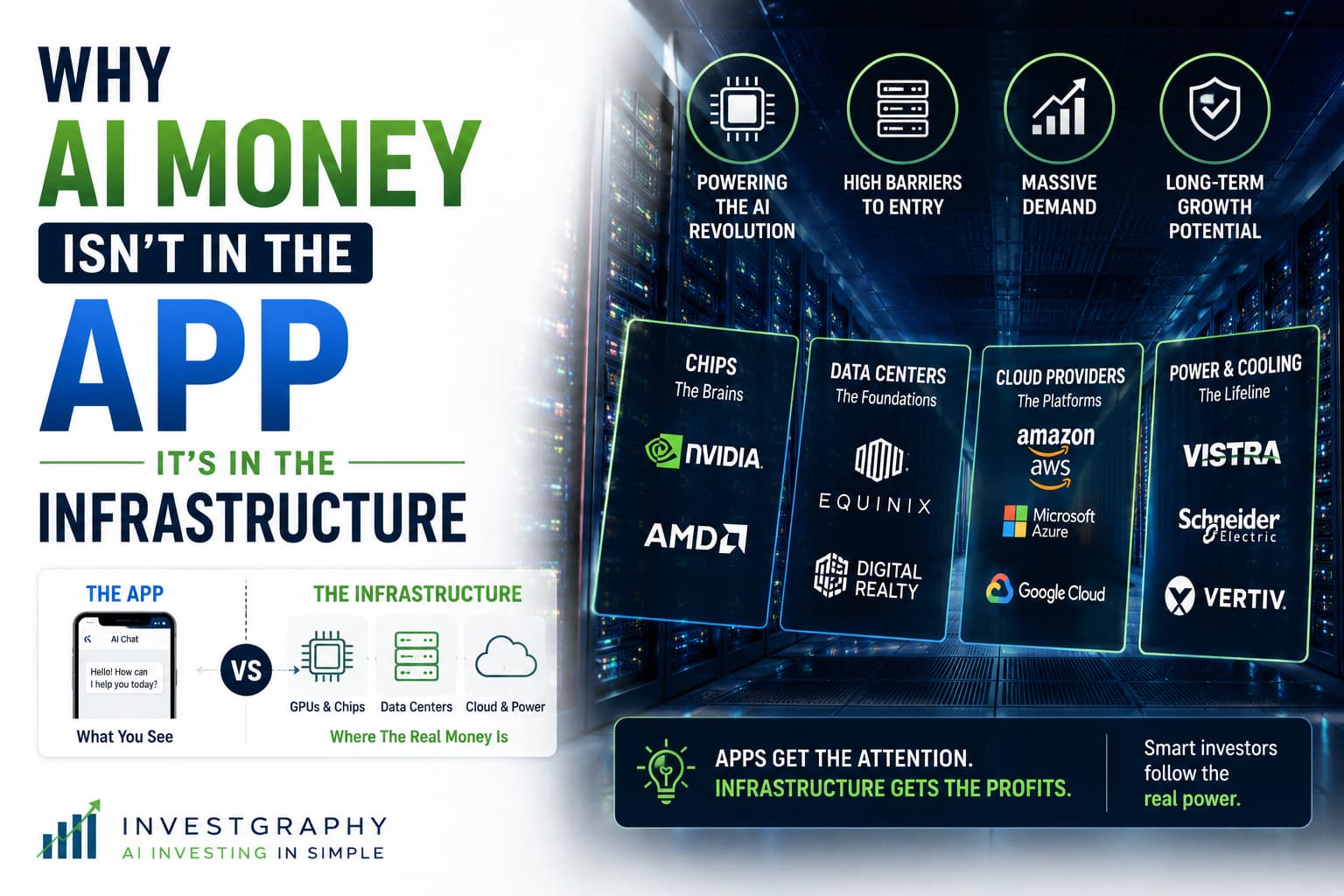
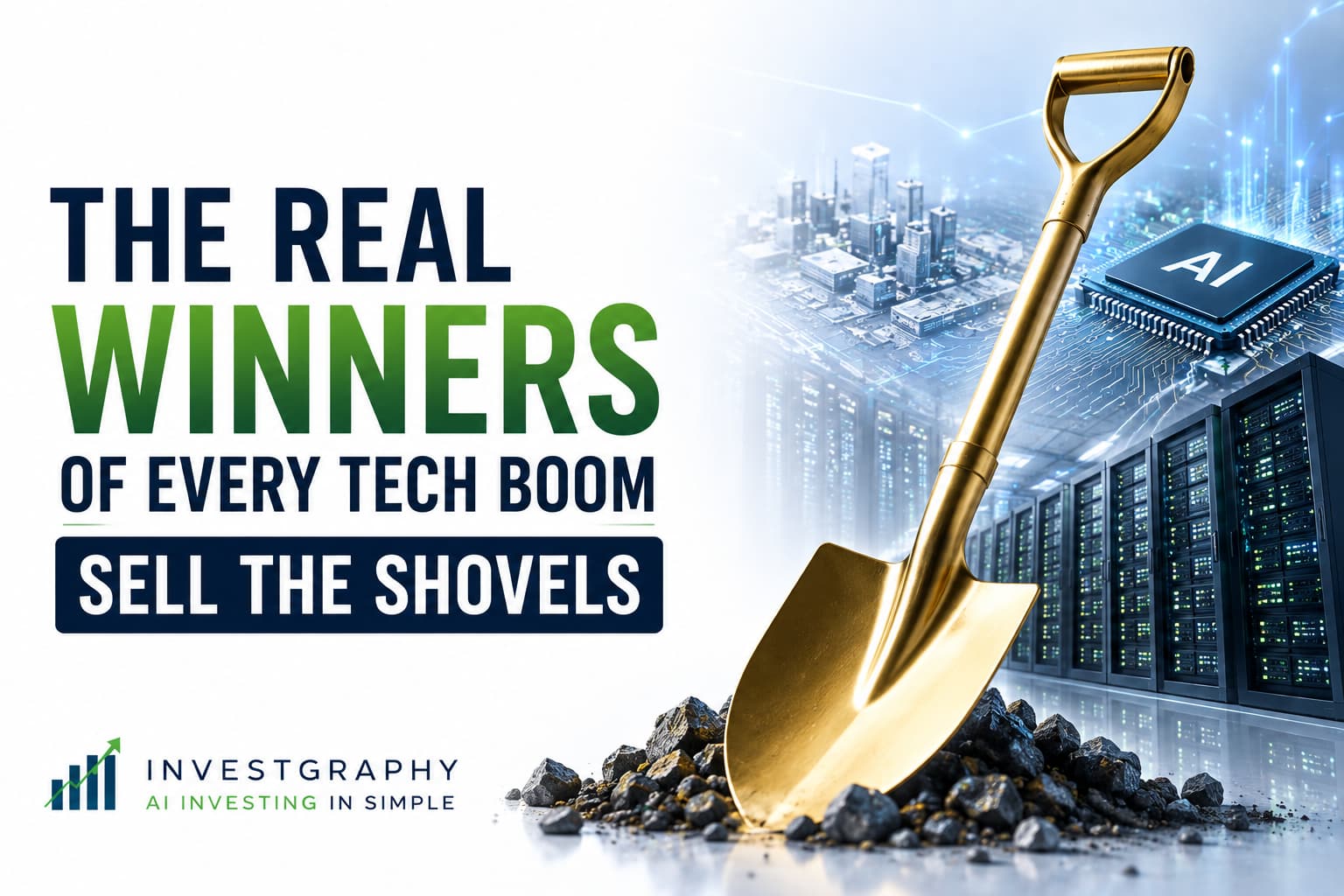
The picks-and-shovels strategy means investing in the companies supplying essential tools to an industry, rather than betting on which end product wins. In the California Gold Rush, the equipment sellers reliably made money while miners gambled on finding gold. In AI, the same logic applies. The five largest US tech companies are spending over $650 billion on AI infrastructure in 2026. That money goes to chip makers, data center builders, power suppliers, and cooling companies, not to the apps.
The Gold Rush Lesson That Every Investor Forgets
In 1849, hundreds of thousands of people flooded California looking for gold. Most left with nothing. A small number struck it rich. But one group made money almost regardless of outcome: the merchants selling equipment, food, and supplies to the miners.
Levi Strauss made his fortune selling durable trousers to miners, not mining. Samuel Brannan bought every pickaxe and shovel in San Francisco, then announced the gold rush publicly. He made $36,000 in nine weeks while everyone else went digging.
The lesson is simple: when an industry is growing fast and everyone is competing, the reliable money is often in supplying what every competitor needs.
AI in 2026 is the same story.
Who the Shovels Are in AI
The AI gold rush has five clear infrastructure layers. Every AI company, from the biggest hyperscaler to the smallest startup, needs all five.
Chips: No AI model runs without processors. NVIDIA dominates over 90% of the data center GPU market. TSMC manufactures the semiconductors that NVIDIA and every other chip company depends on. TSMC reported net revenue of $122.4 billion in 2025, up 35.9% year over year with an operating margin of nearly 51%.
Data centers: The physical buildings housing all that compute. Equinix and Digital Realty are the two largest data center REITs. They lease capacity to hyperscalers under multi-year contracts, meaning their revenue is largely locked in regardless of which AI model wins.
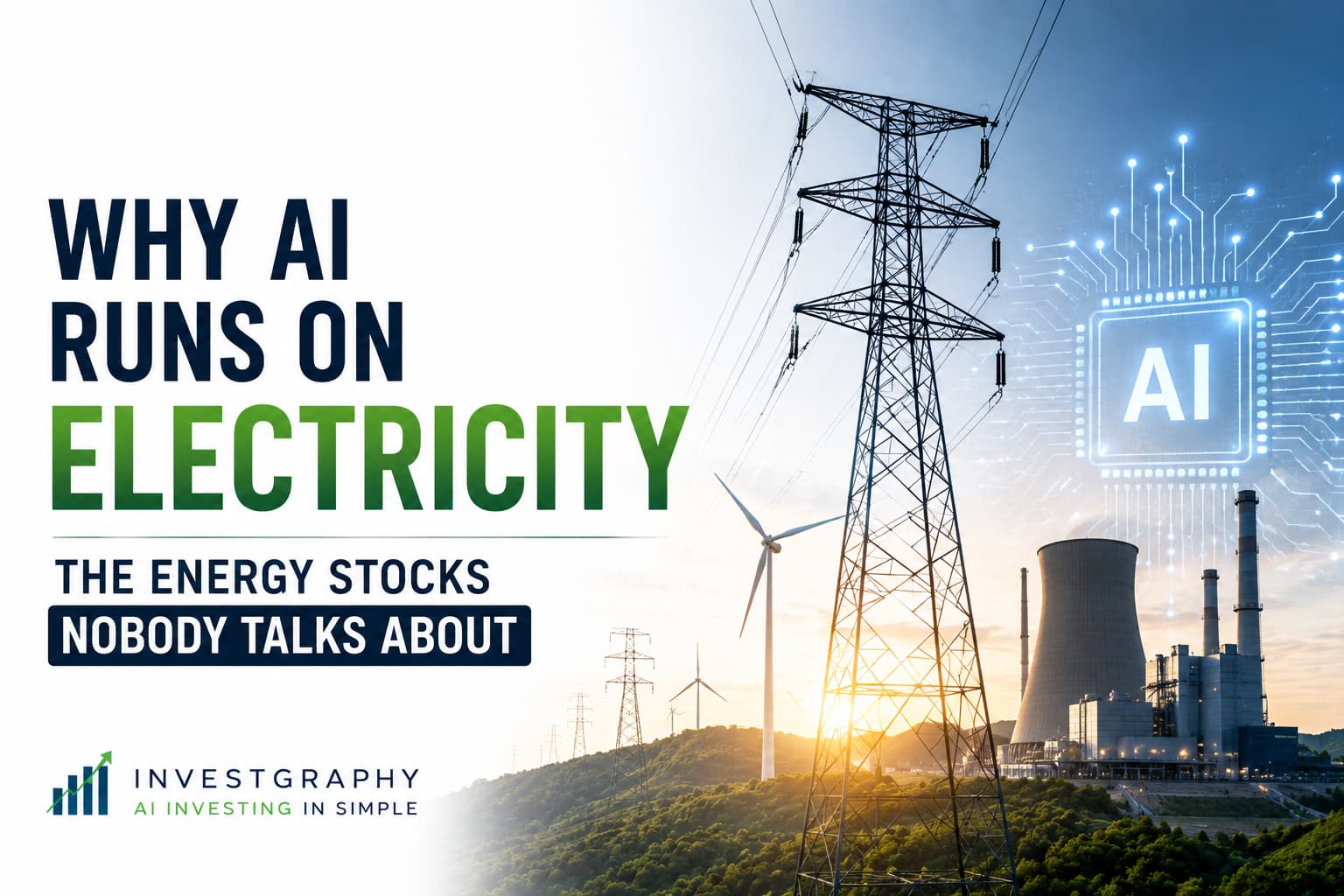
Power: Data centers are now the fastest-growing consumer of electricity in the US. Companies like Eaton Corp supply the electrical systems that manage power inside these facilities. The AI boom has accounted for roughly 60% of recent US economic growth according to Fidelity’s Asset Allocation Research Team.
Cooling: Dense AI chips generate enormous heat. Trane Technologies and Vertiv supply the cooling systems that keep data centers running. Analysts frequently name Vertiv as one of the clearest picks-and-shovels plays because every AI facility needs their products regardless of which model dominates.
Networking: Data needs to move between chips at high speed. Arista Networks dominates high-performance switching in cloud-scale AI environments and is consistently highlighted by analysts for its direct exposure to hyperscaler infrastructure spending.
Why This Strategy Reduces Risk for Beginners
Picking which AI app or model will win is genuinely difficult. OpenAI, Google, Meta, Anthropic, and dozens of startups are all competing. Most of them will not be the last one standing. Some will not survive at all.
Infrastructure companies face a different reality. Whether OpenAI or Google or a startup you have never heard of ends up dominating, they all need chips, data center space, electricity, and cooling. The infrastructure gets paid either way.
This is why infrastructure companies often sign long-term contracts, sometimes multi-year agreements, that give them revenue visibility that model developers simply do not have. CoreWeave, one of the newer GPU cloud providers, reported a contracted revenue backlog exceeding $66 billion going into 2026. That is not speculation about future demand. That is signed contracts.
The Nuance Beginners Should Know
The picks-and-shovels story is compelling. It is also not a guaranteed path to profit. There are two risks a beginner should understand before applying this strategy.
The first is valuation. NVIDIA, TSMC, and the most obvious infrastructure plays already trade at prices that reflect a lot of expected growth. The easy money in those names may already have been made. The question is whether the buildout continues long enough to justify current prices, and Goldman Sachs projecting $7.6 trillion in AI infrastructure spend through 2031 suggests it might.
The second is that the largest customers are building their own shovels. Amazon has Trainium chips. Google has TPUs. Microsoft has Maia. As hyperscalers build custom silicon, their dependence on external suppliers like NVIDIA may gradually decrease. This is not an immediate risk, NVIDIA’s scale and ecosystem remain dominant, but it is worth understanding before assuming the dynamic lasts forever.
What a Beginner Can Do With This
You do not need to pick individual infrastructure stocks to apply this strategy. Broad semiconductor ETFs and technology index funds give you diversified exposure across multiple layers of the AI infrastructure stack.
Before researching any specific investment, identify which layer it operates in. A chip company, a data center REIT, a power equipment supplier, and a cooling systems manufacturer are all picks-and-shovels plays, but they carry different risks and growth profiles. Understanding the layer first helps you ask the right questions.
The core principle is simple: follow the capex. When companies commit $650 billion in a single year to building infrastructure, that spending does not disappear, it flows to the companies supplying what they need to build it.
FAQ
What does picks and shovels mean in investing?
Picks and shovels investing means buying companies that supply essential tools or infrastructure to a growing industry rather than betting on which end product wins. The term comes from the Gold Rush, where equipment sellers often profited more reliably than miners. In AI, this means investing in chip makers, data centers, power companies, and cooling systems rather than AI apps.
Is NVIDIA a picks-and-shovels stock?
Yes, NVIDIA is widely considered the clearest picks-and-shovels play in AI. The company supplies the GPUs that power virtually every major AI model in existence. With over 90% market share in data center GPUs and $197 billion in data center revenue for fiscal year 2026, NVIDIA profits directly from hyperscaler infrastructure spending regardless of which AI application wins.
Are there picks-and-shovels AI ETFs?
Several ETFs give diversified exposure to AI infrastructure without requiring stock selection. Examples include semiconductor-focused funds like SOXX and SMH, and broader technology indices like QQQM. There are also data center-specific ETFs. These are starting points for your own research, not recommendations. Consult a financial advisor before making investment decisions.
What are the risks of picks-and-shovels investing in AI?
The main risks are valuation, the most obvious infrastructure plays may already price in significant growth, and disintermediation, where large customers build their own alternatives. Amazon, Google, and Microsoft are all developing custom AI chips, which may reduce their long-term dependence on external suppliers. Infrastructure investing reduces uncertainty compared to betting on model winners, but it does not eliminate risk.
Every major technology boom in history has had a version of this dynamic. The telegraph boom. The railroad era. The internet. The companies supplying the essential infrastructure, the cables, the rails, the servers, often built more durable businesses than the companies trying to win the consumer market.
AI in 2026 is following the same pattern. A massive $650 billion in annual infrastructure spending does not lie about where the demand is.
The apps get the attention. The shovels get the capital.
Want this kind of thinking in your inbox every week? Subscribe to the Investgraphy brief · plain English, no hype, five minutes.
This article is for educational and informational purposes only and does not constitute financial advice. All figures cited are sourced from publicly available reports including Fidelity, Goldman Sachs, Motley Fool, and company earnings disclosures. Investing involves risk including possible loss of principal. Always conduct your own research and consult a qualified financial advisor before making investment decisions.
About the Author
Investgraphy Team · Independent AI investing education for self-directed beginners. No hype, no jargon, no financial advice.