
Now Reading: Why AI Money Isn’t in the App It’s in the Infrastructure
-
01
Why AI Money Isn’t in the App It’s in the Infrastructure

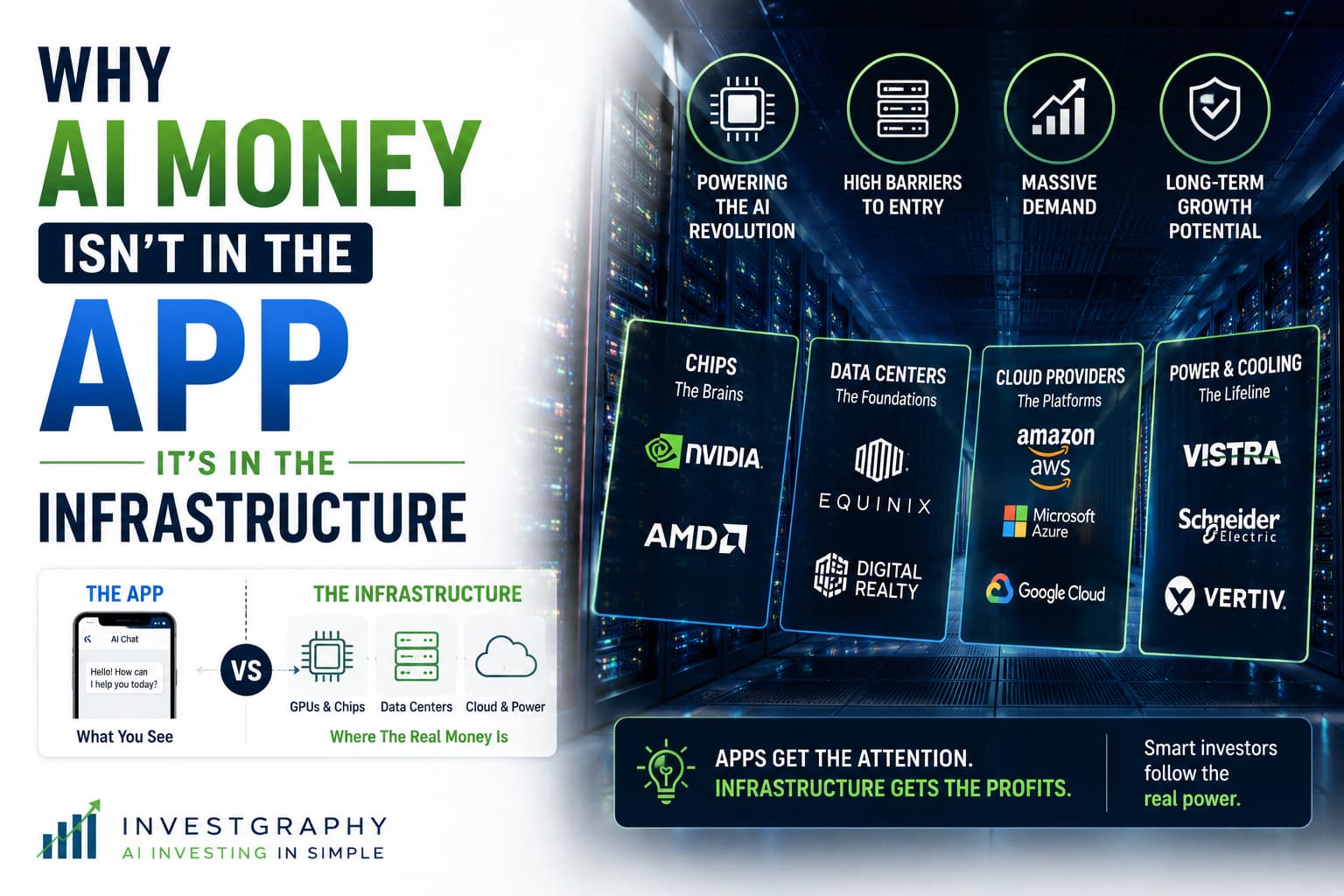
Key Takeaways
- The five largest tech companies are spending $660–690 billion on AI infrastructure in 2026 alone—not on apps.
- NVIDIA’s data center revenue hit $197 billion in fiscal year 2026, up 65% year over year.
- AI infrastructure accounted for 80% of all US private domestic demand growth in the first half of 2025.
- Goldman Sachs projects $7.6 trillion in AI capital spending between 2026 and 2031—almost entirely in infrastructure.
While most beginners were downloading AI apps, institutions were spending hundreds of billions on the hardware underneath them. In 2026, Amazon, Microsoft, Meta, Google, and Oracle collectively committed $660 to $690 billion to AI infrastructure—data centers, chips, and power systems. That is where the money went. That is where it continues to go.
Everyone Bought the Wrong Layer
When ChatGPT launched, most retail investors did one of two things. They either searched for a way to buy OpenAI—which isn’t publicly listed—or they bought Microsoft, assuming proximity to OpenAI meant real exposure to the upside.
Both instincts were understandable. Both missed the point.
The companies that captured the AI boom weren’t the ones with the polished interface. They were the ones selling what every AI model on earth runs on. NVIDIA’s data center revenue reached $197.3 billion in its fiscal year ending January 2026—up 65% from the prior year. Not because their app was popular. Because you cannot run a single serious AI model without their chips.
What “Infrastructure” Actually Means
Infrastructure is everything the user never sees. When you type a prompt into any AI tool, here is what happens behind it:
Your request hits a data center. That data center runs on GPUs—primarily NVIDIA chips. Those GPUs were manufactured using semiconductors from TSMC. The data center consumes enormous electricity, supplied by energy companies. The whole system needs industrial cooling infrastructure to avoid overheating.
None of that is visible to you. All of it costs money. And all of it generates revenue—just not for the app developer.
S&P Global reported that in the first half of 2025, AI infrastructure investment accounted for 80% of all US private domestic demand growth. That is not a technology story. That is a macroeconomic story.
The Scale of What Institutions Are Actually Spending
These are not projections. These are 2026 commitments already announced:
Amazon has committed $200 billion in capital expenditure for 2026—a nearly 50% year-over-year increase. Microsoft is running at a $145 billion annualized capex rate. Meta disclosed $115 to $135 billion for 2026, nearly doubling what it spent in 2025. Google and Oracle complete the picture.
Combined, the five largest US cloud and AI infrastructure providers committed between $660 and $690 billion for 2026 alone. Goldman Sachs projects the total bill for compute, data centers, and power will reach $7.6 trillion between 2026 and 2031.
That capital is flowing into three places: GPU and chip procurement, physical data center construction, and networking and cooling infrastructure. Consumer apps received a fraction of it.
Why the App Layer Is a Trap for Beginners
Consumer AI apps compete on price, features, and convenience. That competition is already fierce—and it drives prices down. When prices fall, margins compress. When margins compress, so does the investment case.
Infrastructure works the opposite way. Every new AI app that launches needs more compute. More compute means more chips, more data center space, more power capacity. The more competitive the app market becomes, the more the infrastructure layer benefits from it.
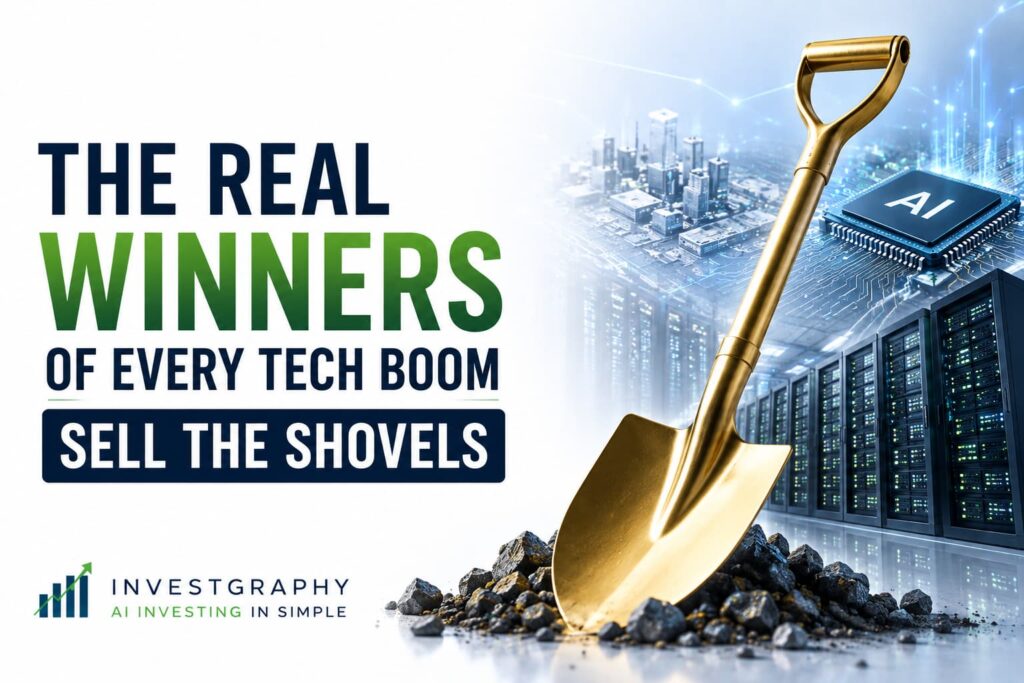
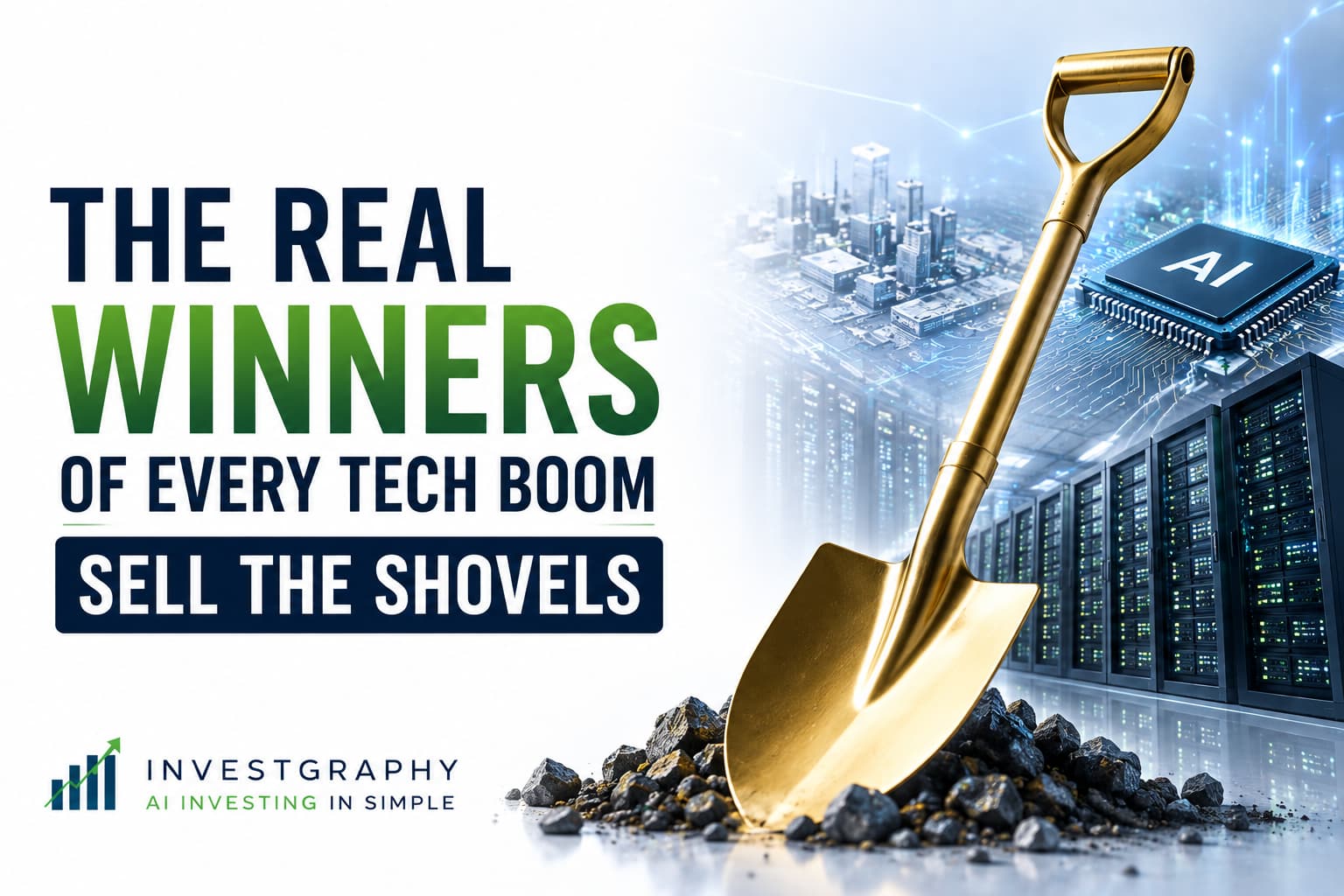
This is the picks-and-shovels dynamic. During the California Gold Rush, the people who reliably made money were not the miners—they were the ones selling the equipment. AI in 2025 and 2026 follows the same logic. The data center market alone is projected to grow from roughly 30 gigawatts of power capacity in 2025 to over 90 gigawatts by 2030.
The demand is structural. It does not depend on which AI app wins.
What This Means if You Are a Beginner Investor
You do not need to pick individual stocks to get exposure to the infrastructure layer. Several index funds and ETFs give broad access without the risk of betting on a single company.
Funds that track semiconductor indices—such as SOXX or SMH—have historically followed the infrastructure layer closely. Broader technology indices like QQQM also carry significant chip and data center exposure. These are not recommendations. They are examples of what to research first.
Before you invest in anything AI-related, ask one question: is this company building the layer that everyone else depends on, or is it one of many apps competing for the same users?
That question alone will change how you look at every AI investing opportunity from here.
FAQ
What is AI infrastructure investing?
AI infrastructure investing means putting money into companies that build and operate the hardware, chips, data centers, and power systems that AI models run on—rather than the AI apps themselves. NVIDIA, TSMC, and major cloud providers are the core examples of this layer.
Why are institutions spending so much on AI infrastructure in 2026?
Because demand for compute keeps accelerating. Every new AI model requires more processing power, which requires more chips and more data center capacity. Goldman Sachs projects $7.6 trillion in total AI infrastructure spending between 2026 and 2031—institutions are positioning early in that cycle.
Is it too late to invest in AI infrastructure?
Analysts and firms including KKR and Blackstone suggest the AI infrastructure buildout is still in early stages as of 2026, with data center construction and chip demand continuing to grow. Whether the timing is right for you depends on your personal financial situation. This is not financial advice—always do your own research.
How can a beginner get exposure to AI infrastructure without picking stocks?
Index funds and ETFs that track semiconductor or broad technology sectors offer diversified exposure to the infrastructure layer. Research funds like SOXX, SMH, or QQQM as starting points. Consult a financial advisor before making any investment decisions.
The most important thing a beginner can understand about AI investing is not which app is winning. It is which layer of the stack everyone depends on—the chips, the data centers, the power grid feeding them.
In 2026, institutions committed nearly $700 billion to that layer. The apps got the headlines. The infrastructure got the capital.
Want this kind of breakdown every week? Subscribe to the Investgraphy brief · plain English, no hype, five minutes.
This article is for educational and informational purposes only and does not constitute financial advice. All figures cited are sourced from publicly available reports including Goldman Sachs, KKR, S&P Global, and company earnings disclosures. Investing involves risk including possible loss of principal. Always conduct your own research and consult a qualified financial advisor before making investment decisions.
About the Author
Investgraphy Team · Independent AI investing education for self-directed beginners. No hype, no jargon, no financial advice.